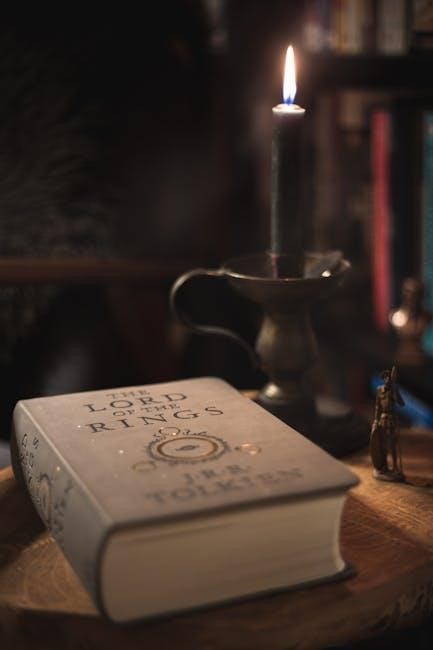
Lord of the Flies Novel PDF: A Comprehensive Guide
Lord of the Flies, initially a modest success, experienced a surge in popularity, becoming a staple in educational curricula; finding a reliable PDF version is crucial.
Lord of the Flies, penned by William Golding, is a chilling exploration of human nature, societal structures, and the inherent conflict between civilization and savagery. The novel follows a group of British schoolboys stranded on a deserted island after a plane crash during a wartime evacuation. Initially, they attempt to govern themselves, establishing rules and electing Ralph as their leader, hoping for rescue.
However, as time progresses, their fragile attempts at order unravel, giving way to primal instincts and a descent into chaos. Jack, a charismatic but ruthless choirboy, challenges Ralph’s authority, appealing to the boys’ baser desires. The island becomes a microcosm of society, revealing the dark side of humanity and questioning the very foundations of morality. A readily available Lord of the Flies PDF allows students and enthusiasts alike to delve into this thought-provoking narrative.
Historical Context and Publication
Lord of the Flies emerged from the shadow of World War II, deeply influenced by Golding’s own experiences serving in the Royal Navy. Witnessing the brutal realities of conflict profoundly shaped his pessimistic view of human nature, a perspective vividly portrayed in the novel. Published in 1954 in England, the book initially faced a lukewarm reception, selling only 2,383 copies in the US in 1955 before temporarily going out of print.
The novel’s themes resonated more strongly with readers as the Cold War anxieties escalated, leading to a resurgence in popularity with the 1959 paperback edition. The availability of a Lord of the Flies PDF today allows for wider access to this historically significant work, enabling continued analysis of its enduring relevance in a world still grappling with conflict and societal breakdown.
The Novel’s Initial Reception and Sales Figures
Despite its current status as a literary classic, Lord of the Flies experienced a surprisingly slow start. Upon its 1954 publication in England, and subsequent 1955 release in the United States, sales figures were modest, reaching only 2,383 copies in the US before falling out of print. Initial critical reviews were positive in Britain, fostering some word-of-mouth acclaim, but this didn’t immediately translate into widespread commercial success.
The turning point arrived in 1959 with the release of a paperback edition. This accessibility, coupled with growing societal anxieties, propelled the novel into the spotlight. Today, the availability of a Lord of the Flies PDF demonstrates its enduring appeal, though the initial sales figures highlight a fascinating contrast between critical appreciation and immediate market demand.
Characters and Their Symbolism
Lord of the Flies utilizes characters – Ralph, Jack, Simon, and Piggy – as potent symbols representing civilization, savagery, spirituality, and intellect, respectively.
Ralph: Leadership and Civilization
Ralph embodies the principles of democratic leadership and the inherent human drive towards civilization within Lord of the Flies. Initially elected leader due to his charisma and possession of the conch shell – a symbol of order and rational discourse – Ralph strives to establish rules and maintain a signal fire, representing hope for rescue and connection to the civilized world.
However, his commitment to these ideals is progressively challenged by Jack’s appeal to primal instincts and the allure of unrestrained freedom. Ralph’s struggle isn’t simply about maintaining power, but about preserving a fragile sense of morality and societal structure against the encroaching savagery of the island. He represents the adult world and the constraints it imposes, a concept increasingly rejected by the boys.
His eventual pursuit by Jack’s tribe signifies the complete triumph of instinct over reason, and the collapse of the civilized order he desperately attempted to uphold. Ralph’s character arc highlights Golding’s exploration of the delicate balance between human impulse and societal control.
Jack: Savagery and Instinct

Jack Merridew functions as the primary antagonist in Lord of the Flies, representing the untamed, primal instincts lurking within humanity. Initially a choirboy, Jack quickly rejects the constraints of civilization, embracing hunting and a more visceral existence. He skillfully exploits the boys’ fears and desires, appealing to their baser instincts to gain power and followers.
His descent into savagery is marked by a growing obsession with hunting, face paint symbolizing a release from societal norms, and a disregard for rules and consequences. Jack’s tribe offers immediate gratification – meat, excitement, and freedom – contrasting sharply with Ralph’s focus on long-term survival and rescue.
He embodies the seductive power of unchecked aggression and the allure of a life devoid of responsibility. Jack’s ultimate dominance signifies the terrifying potential for savagery to overwhelm reason and order, a central theme explored within the novel’s narrative.
Simon: Spirituality and Insight
Simon stands apart as a profoundly insightful and spiritual character in Lord of the Flies, often perceived as a Christ-like figure. He possesses an innate understanding of the boys’ internal struggles and the true nature of the “beast,” recognizing it not as a physical creature, but as the darkness within themselves.
Unlike the others, Simon seeks solitude and connection with nature, finding solace and clarity in the island’s environment. He attempts to communicate his understanding to Ralph and Piggy, but his attempts are tragically misunderstood. His encounter with the Lord of the Flies reveals the inherent evil present in human nature, a terrifying truth he tries to convey.
Simon’s death, mistaken for the beast, symbolizes the destruction of innocence, reason, and spiritual understanding on the island, highlighting Golding’s bleak view of humanity’s inherent flaws.
Piggy: Intellect and Reason
Piggy embodies intellect, reason, and scientific thinking within the chaotic world of Lord of the Flies. He is physically vulnerable and socially awkward, making him an easy target for the other boys’ ridicule, particularly Jack and his hunters. Despite this, Piggy consistently offers logical solutions and attempts to maintain order through rational discourse.

He represents the power of the human mind and the importance of intellectual pursuits, constantly advocating for rules, planning, and the use of logic. Piggy’s glasses, essential for starting and maintaining the signal fire, symbolize the clarity of vision and the power of intellect.
His tragic death, along with the destruction of the conch shell, signifies the complete triumph of savagery over reason and the loss of civilization on the island.

Themes Explored in the Novel
Lord of the Flies profoundly explores the inherent conflict between civilization and savagery, the devastating loss of innocence, and the pervasive nature of evil.
Civilization vs. Savagery
The central conflict in Lord of the Flies revolves around the struggle between human impulse towards order – civilization – and the primal instincts of savagery. Initially, the boys attempt to establish a civilized society, mirroring the structures they knew from home, with Ralph elected as leader and rules implemented. However, as time progresses, Jack’s appeal to basic desires – hunting, power, and freedom from responsibility – gains traction.
This shift is symbolized by the boys’ deteriorating appearance and behavior, abandoning hygiene and intellectual pursuits for the thrill of the hunt. The signal fire, representing hope for rescue and connection to civilization, is repeatedly neglected as the boys succumb to their savage instincts. Golding uses the island as a microcosm to demonstrate how easily societal constructs can crumble when confronted with the inherent darkness within human nature, questioning whether civilization is merely a fragile veneer.
Loss of Innocence
A profoundly impactful theme within Lord of the Flies is the devastating loss of innocence experienced by the stranded boys. Arriving on the island full of youthful idealism and a belief in inherent goodness, they quickly confront the darker aspects of human nature. The initial excitement of freedom transforms into a terrifying descent into brutality, marked by violence, fear, and the erosion of moral boundaries.
Simon’s tragic fate embodies this loss most acutely, as his attempt to understand the “beast” – the inherent evil within themselves – leads to his brutal murder. Piggy’s intellectualism and reliance on reason are similarly extinguished by the boys’ savage impulses. The novel illustrates how easily innocence can be corrupted when societal structures are removed, and primal instincts take over, leaving the boys irrevocably changed by their experience.
The Nature of Evil
Lord of the Flies doesn’t present evil as an external force, but rather as an inherent part of human nature. Golding suggests that civilization is a fragile construct, barely containing the savage instincts that lie beneath the surface. The “beast” initially feared by the boys isn’t a physical creature, but a manifestation of the darkness within themselves, fueled by fear and unchecked desires.
Jack’s descent into savagery exemplifies this, as he embraces primal instincts and manipulates the other boys through appeals to their baser impulses. The hunting rituals and violent acts demonstrate how easily humans can succumb to brutality when removed from societal constraints. The novel powerfully argues that evil isn’t something imposed from outside, but a potentiality residing within every individual, waiting for the opportunity to emerge.

The Connection to “The Coral Island”
Lord of the Flies directly responds to R.M. Ballantyne’s The Coral Island, subverting its idealized depiction of British colonialism and boyhood adventure.
Golding’s Response to R.M. Ballantyne’s Work
William Golding consciously engaged with R.M. Ballantyne’s 1857 novel, The Coral Island, as a point of departure for Lord of the Flies. He wasn’t simply writing a survival story; he was actively critiquing the optimistic and often naive portrayal of British imperialism and inherent goodness present in Ballantyne’s work.

The Coral Island featured British schoolboys thriving in a tropical setting, readily assisting “natives” and establishing a harmonious existence. Golding, having experienced the horrors of World War II, viewed such depictions as dangerously unrealistic and potentially masking the darker aspects of human nature and colonial power dynamics.
His novel deliberately inverts this narrative, presenting a descent into savagery where the boys struggle with primal instincts and ultimately fail to create a functioning, moral society. Golding’s intention was to expose the fragility of civilization and the potential for evil that exists within everyone, a stark contrast to the idealized world presented in The Coral Island.
Parallels and Contrasts in Character Names
Golding’s deliberate choice of character names in Lord of the Flies reveals a direct engagement with R.M. Ballantyne’s The Coral Island. The names Ralph and Jack are directly lifted from Ballantyne’s novel, immediately establishing a connection – and a deliberate subversion – for the reader. This isn’t accidental; it signals Golding’s intention to respond to and reimagine the earlier work.
The character of Simon presents a more nuanced connection; He’s believed to be derived from “Peterkin” of The Coral Island, through the allusion to Simon Peter from the Bible, elevating Simon’s role to a Christ-like figure embodying spirituality and insight.
However, unlike the harmonious relationships in Ballantyne’s novel, Golding’s characters descend into conflict. The shared names highlight the potential for both good and evil inherent in human nature, a central theme explored throughout Lord of the Flies.
Critique of Idealized Colonialism
Lord of the Flies functions as a pointed critique of the idealized British colonialism prevalent in literature like R.M. Ballantyne’s The Coral Island. Golding directly challenges the notion of inherent British superiority and the harmonious relationship between colonizers and colonized depicted in earlier adventure stories.
Written in the shadow of World War II, Golding’s novel questions the assumptions underpinning colonial endeavors, exposing the potential for savagery and brutality within even seemingly civilized societies. The boys’ descent into chaos mirrors the darker aspects of imperial history, suggesting that power dynamics and inherent human flaws, not inherent cultural superiority, drive conflict.
By dismantling the tropes of the adventure genre, Golding offers a starkly realistic – and pessimistic – view of human nature and the dangers of unchecked power, effectively deconstructing the romanticized narratives of colonialism.

Finding and Accessing a Lord of the Flies PDF
Locating a Lord of the Flies PDF requires careful consideration of legitimate sources and copyright laws to ensure legal and ethical access.
Legitimate Sources for PDF Downloads
When seeking a Lord of the Flies PDF, prioritizing legitimate sources is paramount to respecting copyright and ensuring a safe download experience. Several avenues offer legally accessible versions of the novel. Educational institutions often provide PDFs through licensed digital libraries or course materials for enrolled students.
Reputable online bookstores, such as Amazon and Barnes & Noble, frequently sell digital copies, including PDF formats, directly from publishers. Project Gutenberg, a volunteer effort to digitize and archive cultural works, may offer a free, legally-distributed PDF, though availability can vary.
Furthermore, many public libraries offer e-book lending services, allowing patrons to borrow and download PDFs with a library card. Always verify the source’s authenticity and security before downloading any file to protect your device from malware and uphold intellectual property rights. Avoid unofficial websites offering free downloads, as these often violate copyright laws and pose security risks.
Copyright Considerations and Legal Access
Lord of the Flies remains under copyright protection, meaning unauthorized reproduction and distribution, including sharing illegal PDF copies, are violations of intellectual property law. William Golding’s estate retains these rights, and accessing the novel without proper authorization is unethical and potentially illegal.
Downloading PDFs from unverified sources exposes users to risks like malware and viruses, alongside potential legal repercussions. Supporting authors and publishers by purchasing legitimate copies—whether physical books or authorized digital downloads—ensures continued literary creation.
Public domain status, which would allow free distribution, hasn’t yet been reached for this work. Utilizing legitimate sources, like those previously mentioned, guarantees legal access and supports the creative ecosystem. Respecting copyright fosters a sustainable environment for authors and the publishing industry, benefiting readers in the long run.




Get your printable shoe size chart UK PDF now and find your perfect fit with our easy-to-use guide

Get the Ideal Logic ESP1 35 manual for installation, troubleshooting, and maintenance guides. Download your copy today!